
9 October 2025
Micheál has walked himself into a shit storm that has weakened his position as leader of FF. The immediate consequence is that “dangerous communist” Catherine Connolly may become our president. Nice.

Picture of the Week
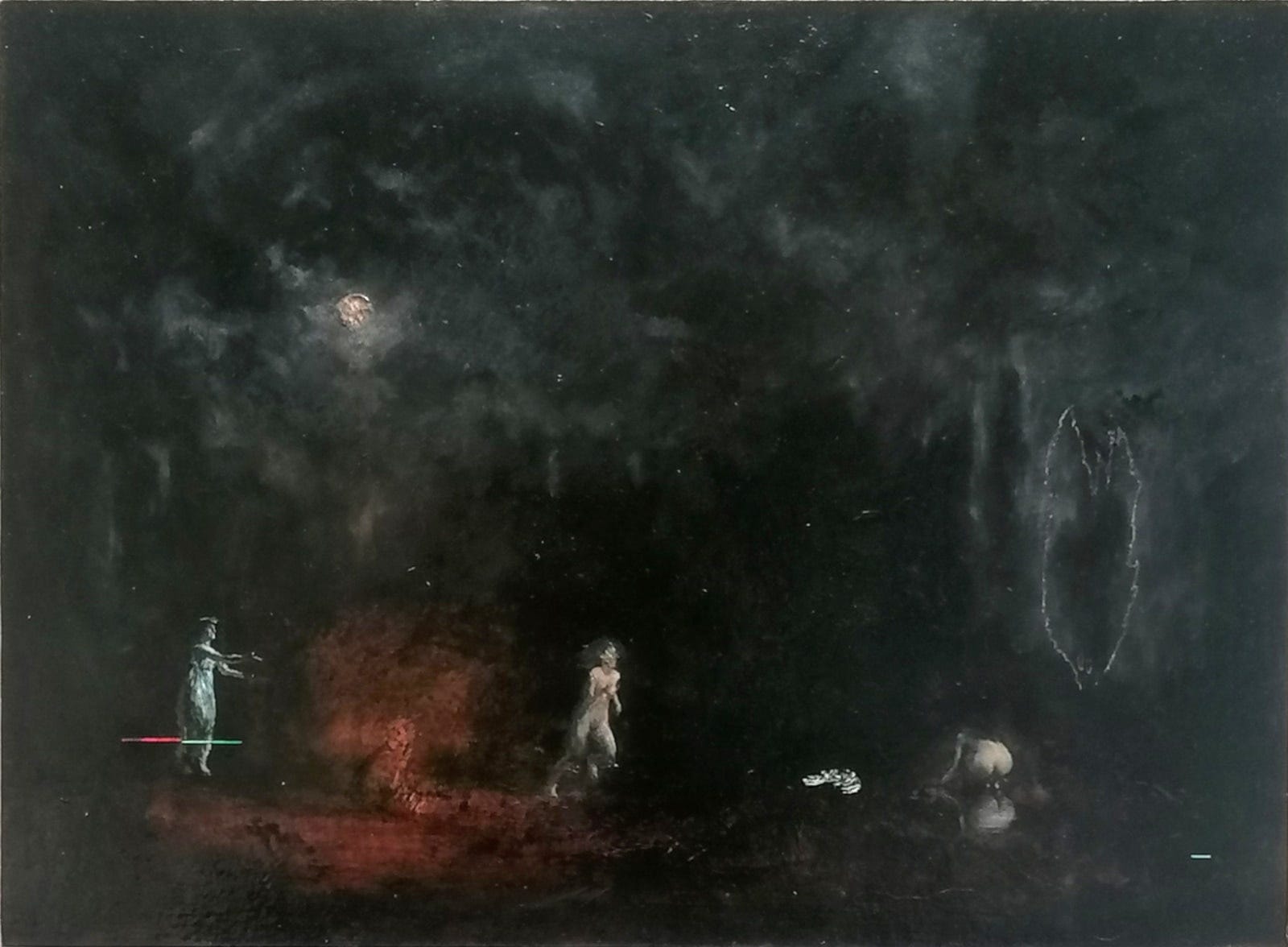
This week features a landscape (Family Album 8) from Sean Molloy’s Headland - A John Heysham-Love Project, opening at the Molesworth Gallery on the 9 October. Molloy’s work seems from another era - but in a good way. His landscapes and portraits owe much to his affection for the baroque, but often with a twist - the capricious and playful intrusion of an alien element into the painting that makes it a ‘capriccio’.
The Moronic Inferno
I was going to take a break from the carnage in Gaza and the death of democracy in the USA this week until I heard this morning of the planned ceasefire in Gaza and a possible peace plan. Bear in mind, when lauding Trump for pushing this plan, the 18,457 dead children in Gaza (see Guardian 8 October). These children were slaughtered by the USA. It armed, financed, and politically approved Israel’s Genocide.
Musical Interlude
The Byrds: The Warmth of the Sun
This was a traditional song rewritten by Jim McGuinn in 1964 to reference the John F. Kennedy assassination. The Byrds sang it at the Monterey Festival and it had a permanent place in their set list. McGuinn changed his first name to Roger in 1967 for religious reasons (don’t ask). The Byrds had many incarnations: the Gene Clarke era, the Gram Parsons phase, the David Crosby dramas but McGuinn remained the one constant over the years.
Theatrical Manoeuvres
I was too late to book a sold-out The Weir in Dublin so I had to follow it to the Harold Pinter Theatre in Soho. It was worth the effort. Conor McPherson’s masterpiece has stood the test of time - a sorry tale of lives unfulfilled, opportunities missed and drink consumed as anaesthesia. And of course sexual deprivation. Gleeson was magnificent in the main role and the cast in general were excellent apart from Tom Vaughan-Lawlor as Finbar who I felt was far too actorly and over the top amidst all the naturalism. As the successful one with a wife and a business he was entitled to cavort triumphantly but I felt it could have been toned down a tad. A quibble rather than a condemnation. The show was a triumph and received as such by the full house.
Kiefer and Van Gogh at the Royal Academy
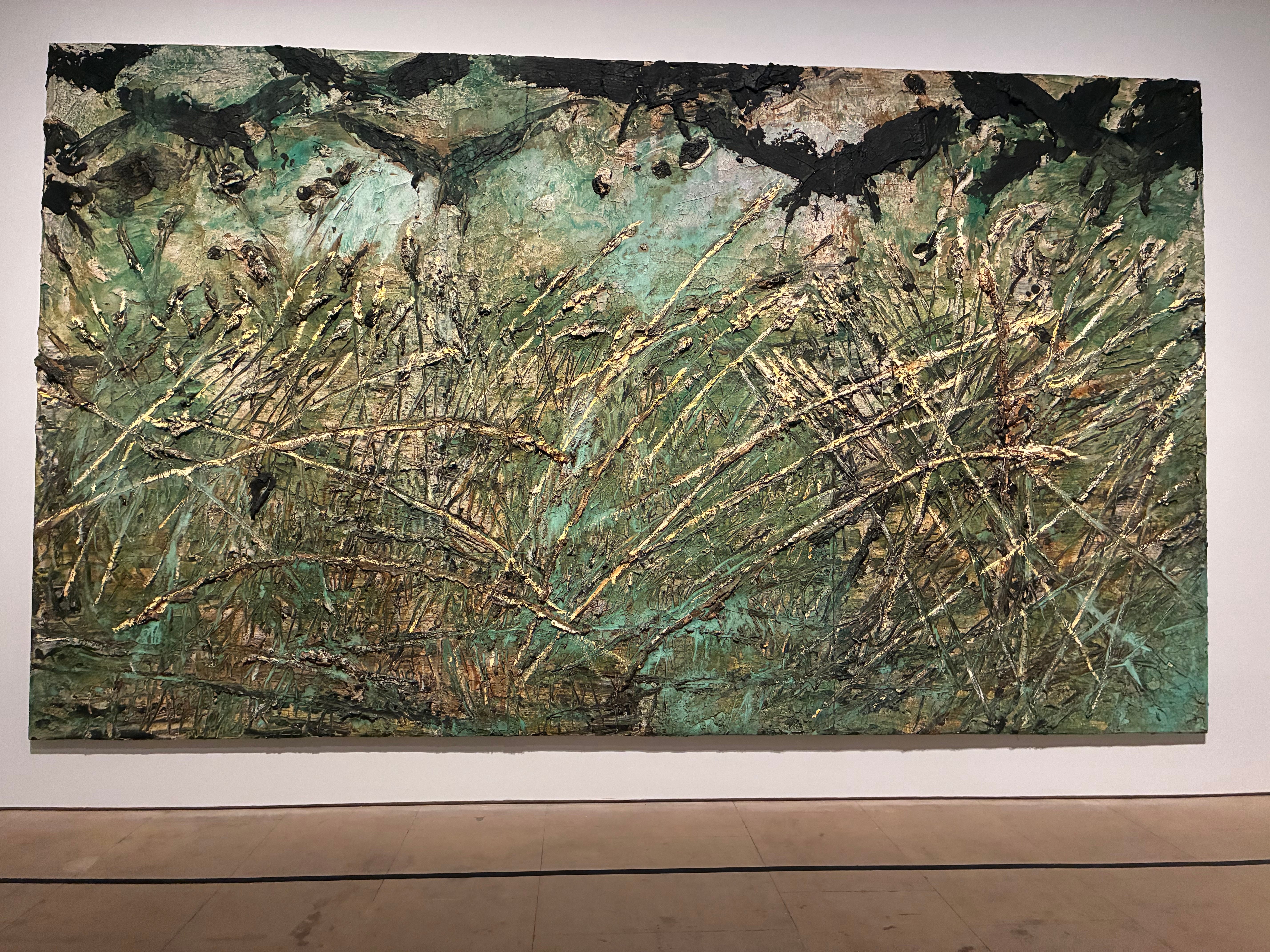
I am a big fan of Kiefer’s monumental work and feel that his magnificent Finnegans Wake at the White Cube a few years ago was very under appreciated. Maybe the White Cube’s tediously accessible location played a part. Also, I’m not sure it even got reviewed in the Irish press. Anyway being in London I had to head for the readily accessible Royal Academy to check out his joint exhibition with Van Gogh. While lacking the scale and impact of the White Cube show, it was worth the visit. There was a striking image of decaying poppies from Kiefer and his version of Van Gogh’s Wheatfield with Crows (below) was more than suggestive of the bombers over Hamburg that blighted his childhood. The simple pencil drawings of rural scenes by both artists were remarkably similiar. The only dud was Kiefer’s Danae (basically a rod emerging from a pile of lead. I’m sure it portents something but was lost on me.
A Morsel of Memoir
From my Curragh days where I lived until I was nine years old:
“An officer’s son had no problem feeling an outsider at the local National School in the Curragh. My parents should probably have sent me to Newbridge College (a rugby-playing school a few miles away) rather than a school full of soldiers’ children. There were very few married officers in the Curragh Camp at the time so I had very few allies. I suspect the reason I was sent to that school was more logistical than democratic – our family didn’t have a car at the time. (My father had an army driver when he needed a car for his work). The result was endless aggravation. I was persistently bullied, getting routinely beaten up in the playground during breaks. I remember being surrounded by a bunch of assailants with my back to the wall and a big country lad, with no military connections, jumping in to support me – provoked perhaps by a sense of fair play. There was also an incident where my eyes were covered and I was pinned to a tree by four or five older boys and had my pockets rifled – a prized new fountain pen was stolen. There was another, more serious, assault in the baths (as we called our local swimming pool) when four young soldiers caught me by a limb each and tossed me in at the deep end. I couldn’t swim and had to be saved by a soldier already in the pool. My assailants were contrite, or guilty, enough to try and placate me afterwards by buying me two marshmallow mice in a nearby shop – a notable treat in those days. What I was doing alone in the pool says much about the relaxed parental regime. I never mentioned the incident at home. I had my moments in the sun however. When it came to sports days I would win most of the races – maybe in that time of food rationing I was better nourished than the others in my school. I can remember the small green-blue ration books my parents had but can never remember going hungry. Later on in a Cork school with middle-class pupils, my athletic prowess was sadly less evident.
One day I fought back against the bullying with unfortunate consequences. I was being pursued home from school by a gang of older girls whose threat was more verbal than physical. I picked up a stone and hurled it randomly towards them. It caught one of them just over the eye and she began to bleed profusely. I ran home and locked myself in the bathroom full of remorse. No one came after me and nothing came of this incident. Perhaps my father fixed it but I never heard. Or perhaps kids were rougher and tougher in those days and bore the brunt of their misadventures more philosophically. These days it would certainly lead to the courts and a fat lump of compensation.
Away from school I mostly avoided the Curragh camp itself with its attendant trouble and instead explored the surrounding area. It was a wonderful domain for a young lad to roam: miles of green plains, furze bushes and the occasional rotting sheep’s carcass. The army training fields with swinging planks over trenches was a favourite playground. Donnelly’s Hollow with its stone monument was also an attraction. I used to recreate Dan Donnelly’s walk from the scene of his triumph against the English champion George Cooper by placing my small feet in the giant footsteps gouged in the turf leading away from the fight site. Had they possibly been there since the fight took place in 1818? Who maintained those dubious tracks? The local county council I suppose. What a quirky task.”
Poetry Corner
The Hospital may not be Patrick Kavanagh’s finest poem, but I fell in love with it many years ago in London when listening to the poet’s rendition of it on the Claddagh Records LP belonging to the owner of the flat I was staying in. The broad Monaghan accent lent it an extra layer of authenticity. And of course it contains one of his most quoted lines - the last one.
The Hospital
A year ago I fell in love with the functional ward
Of a chest hospital: square cubicles in a row
Plain concrete, wash basins—an art lover’s woe,
Not counting how the fellow in the next bed snored.
But nothing whatever is by love debarred,
The common and banal her heat can know.
The corridor led to a stairway and below
Was the inexhaustible adventure of a gravelled yard.
This is what love does to things: the Rialto Bridge,
The main gate that was bent by a heavy lorry,
The seat at the back of a shed that was a suntrap.
Naming these things is the love-act and its pledge;
For we must record love’s mystery without claptrap,
Snatch out of time the passionate transitory.